

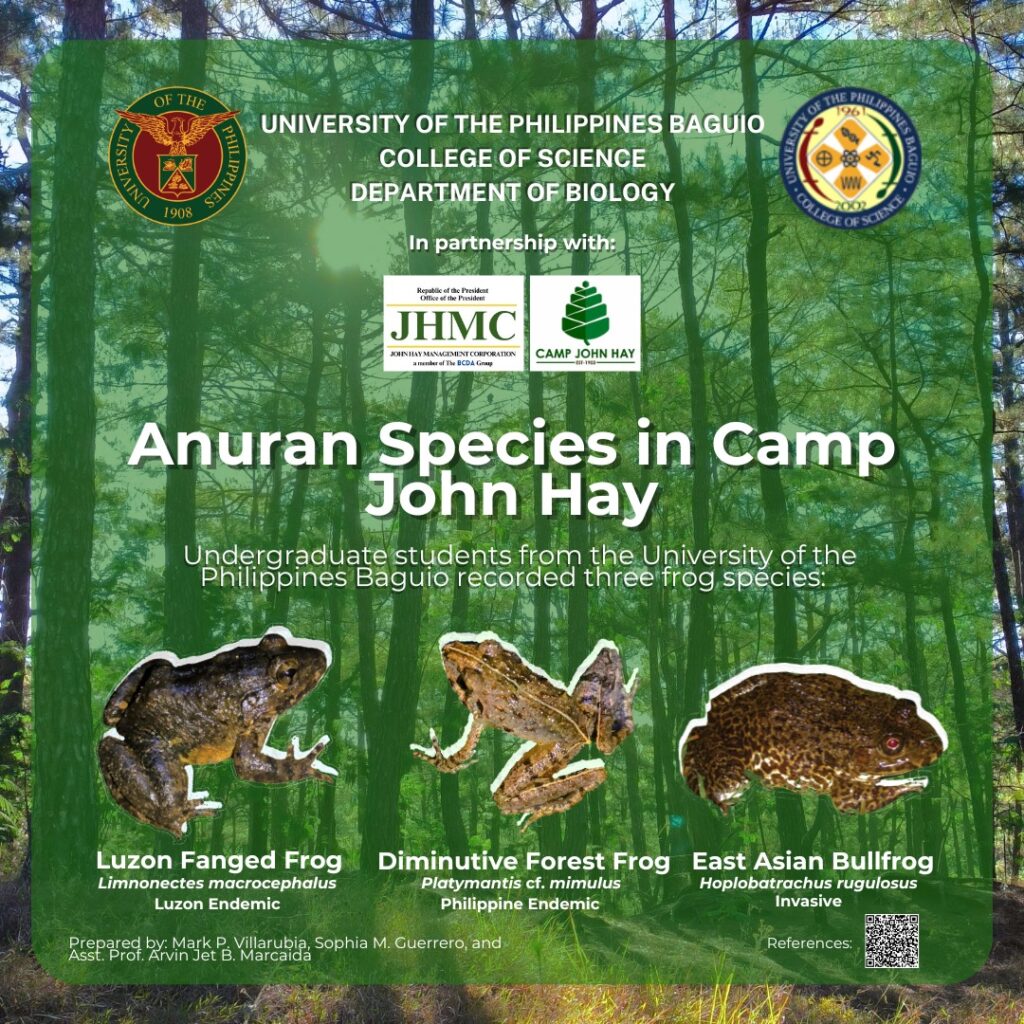
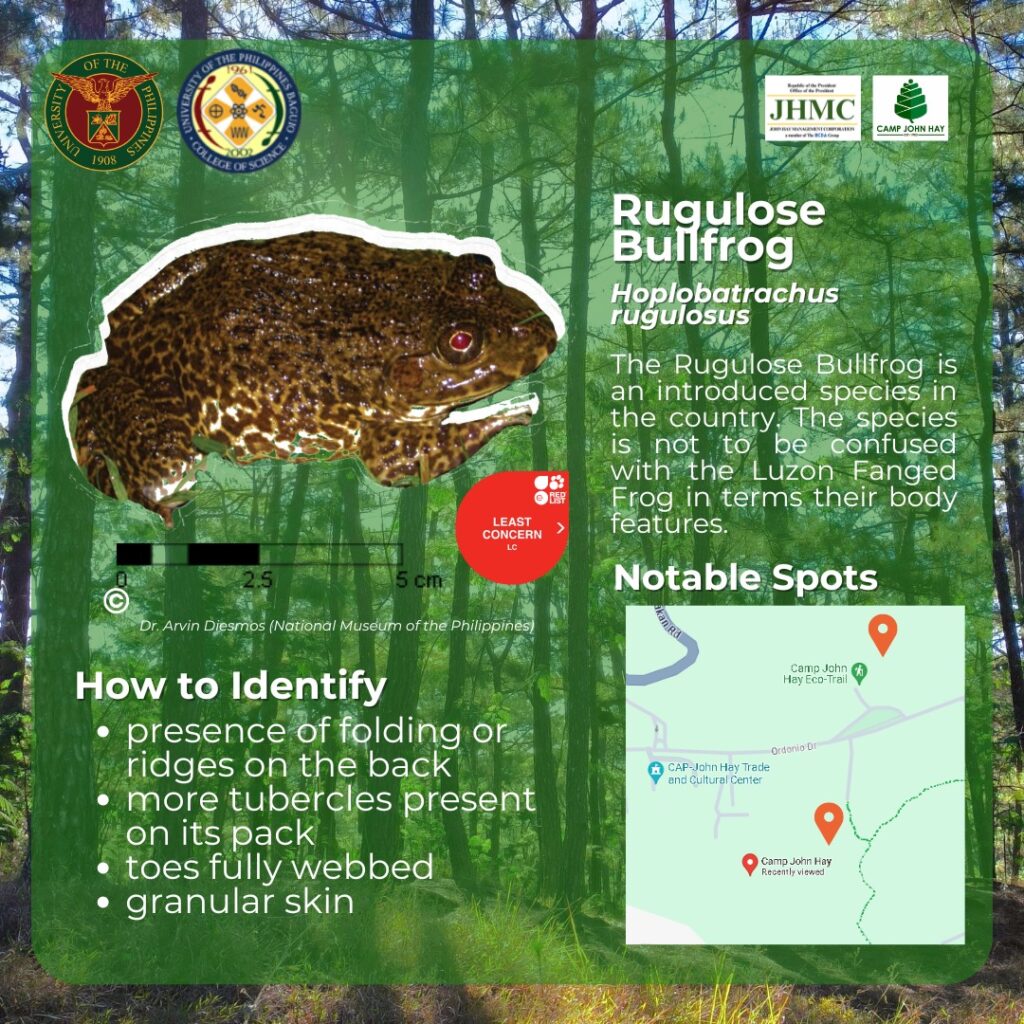
𝐂𝐚𝐦𝐩 𝐉𝐨𝐡𝐧 𝐇𝐚𝐲 𝐢𝐬 𝐡𝐨𝐦𝐞 𝐭𝐨 𝐭𝐡𝐫𝐞𝐞 (𝟑) 𝐧𝐨𝐭𝐚𝐛𝐥𝐞 𝐟𝐫𝐨𝐠 (𝐀𝐧𝐮𝐫𝐚𝐧) 𝐬𝐩𝐞𝐜𝐢𝐞𝐬 𝐰𝐡𝐢𝐜𝐡 𝐡𝐚𝐯𝐞 𝐞𝐜𝐨𝐥𝐨𝐠𝐢𝐜𝐚𝐥 𝐬𝐢𝐠𝐧𝐢𝐟𝐢𝐜𝐚𝐧𝐜𝐞 𝐭𝐨 𝐥𝐨𝐜𝐚𝐥 𝐛𝐢𝐨𝐝𝐢𝐯𝐞𝐫𝐬𝐢𝐭𝐲!
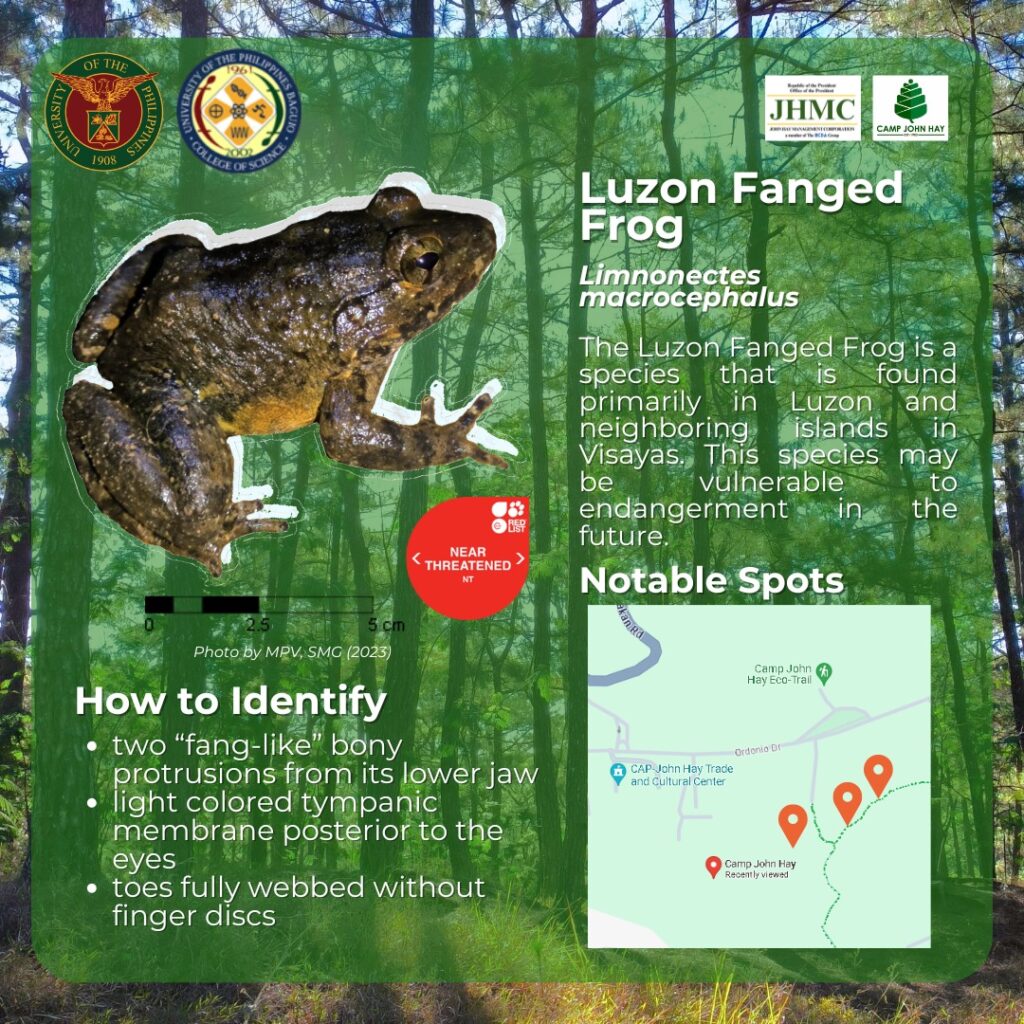
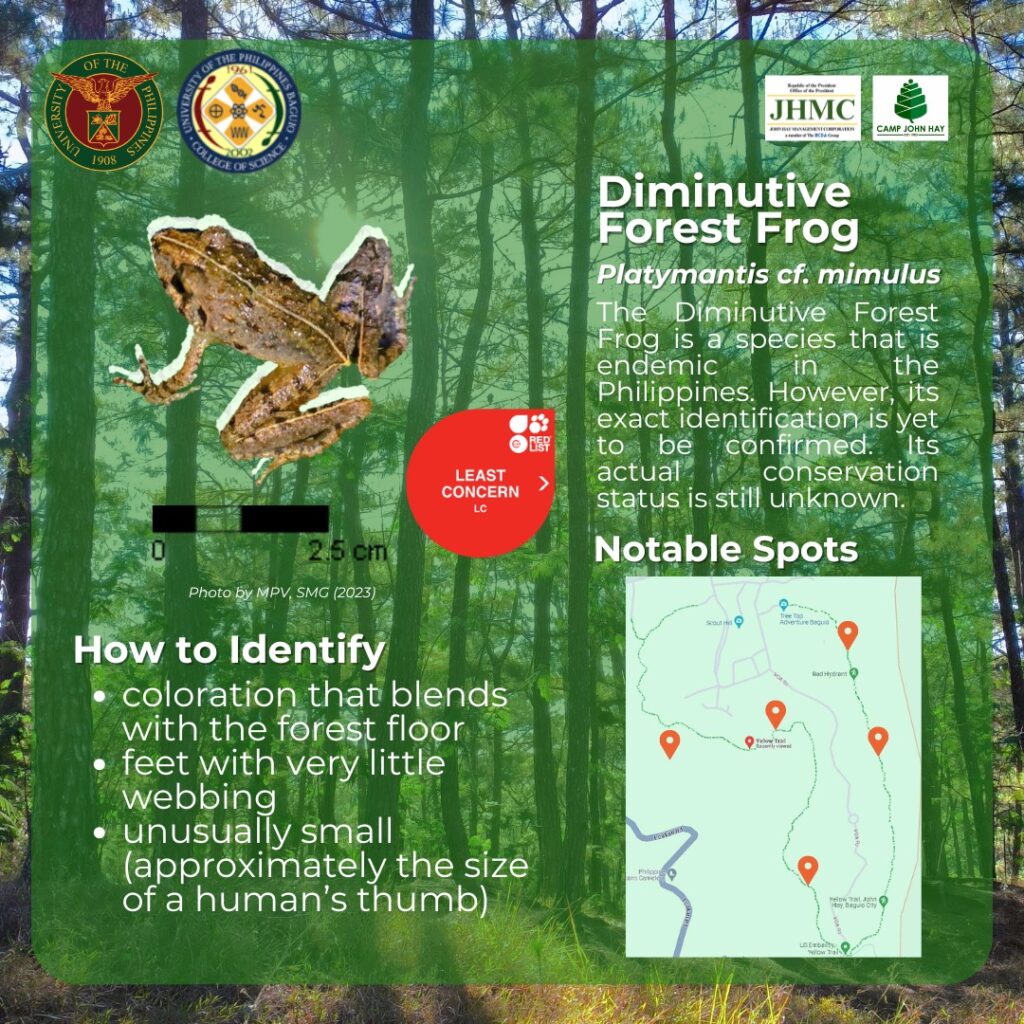
Two (2) of these species are Luzon and Philippine endemics. The Luzon fanged frog is designated by the IUCN as a Near Threatened species indicating its vulnerability to endangerment. Meanwhile, the Diminutive Forest Frog is a species endemic to the Philippines but its exact identification is yet to be confirmed. So, its conservation status still needs to be clarified.
These frog species show the importance of conservation efforts at Camp John Hay. Without our attention, they could be lost forever. Let’s work together to safeguard our wildlife and the pristine beauty of Camp John Hay’s ecosystem.
Hop on as we learn more about these “ribbiting” species and how to identify them
Researchers:
MARK P. VILLARUBIA
SOPHIA REIGN M. GUERRERO
BIANCA GAIL Y. CURA
Adviser:
ARVIN JET B. MARCAIDA, PH.D.
We support the Sustainable Development Goals
SDG-4 (Quality Education); SDG-15 (Life on Land)